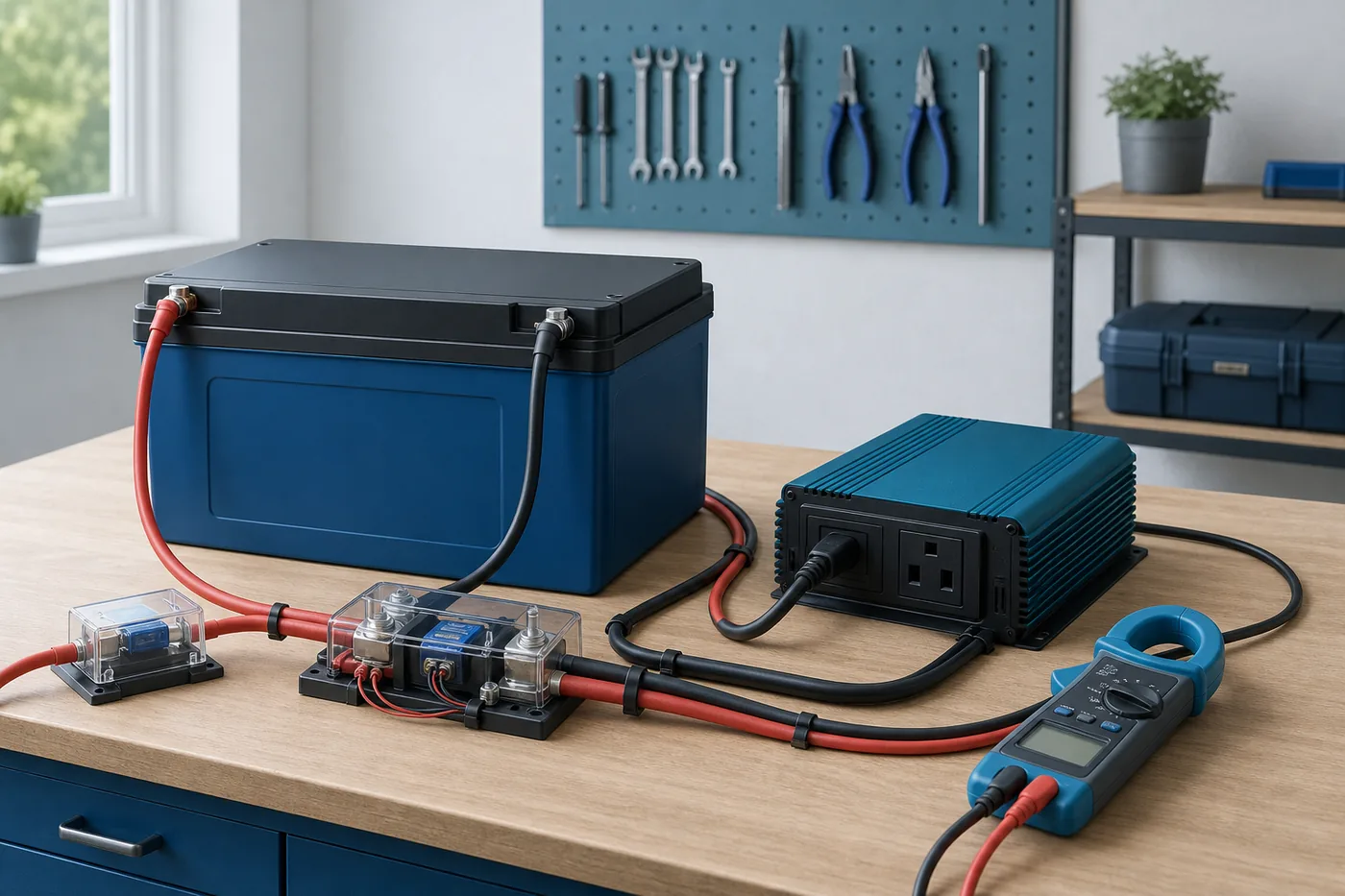
1. The fast formula for LiFePO4 discharge watts
Battery capacity in amp-hours describes charge, while watt-hours describe stored energy. Multiply nominal voltage by amp-hours: a 12.8V 100Ah battery is about 1,280Wh. That number estimates runtime, not the maximum appliance size.
To estimate continuous DC power, multiply operating voltage by the lowest verified continuous current rating. If the battery allows 100A but the BMS allows 60A, calculate with 60A.
2. 100Ah LiFePO4 battery examples
A 12.8V 100Ah pack with a 100A continuous BMS is roughly a 1,280W DC source. At 50A it is about 640W. A 25.6V 100Ah system at 100A is about 2,560W, and a 51.2V system is about 5,120W.
These are planning values. Voltage falls under load, cable loss creates heat, and many batteries cannot hold their peak rating continuously.
| Nominal system | Stored energy at 100Ah | At 50A | At 100A |
|---|---|---|---|
| 12.8V | 1,280Wh | 640W | 1,280W |
| 25.6V | 2,560Wh | 1,280W | 2,560W |
| 51.2V | 5,120Wh | 2,560W | 5,120W |
3. Why the BMS usually sets the real limit
The BMS can open the discharge path when current, cell voltage or temperature crosses a protection threshold. Cell capability, MOSFET cooling, cable gauge, fuse and connector ratings may all be lower than the headline battery capacity.
Do not assume that 100Ah means 100A. Read the battery manual for continuous discharge current, peak current duration and low-temperature restrictions.
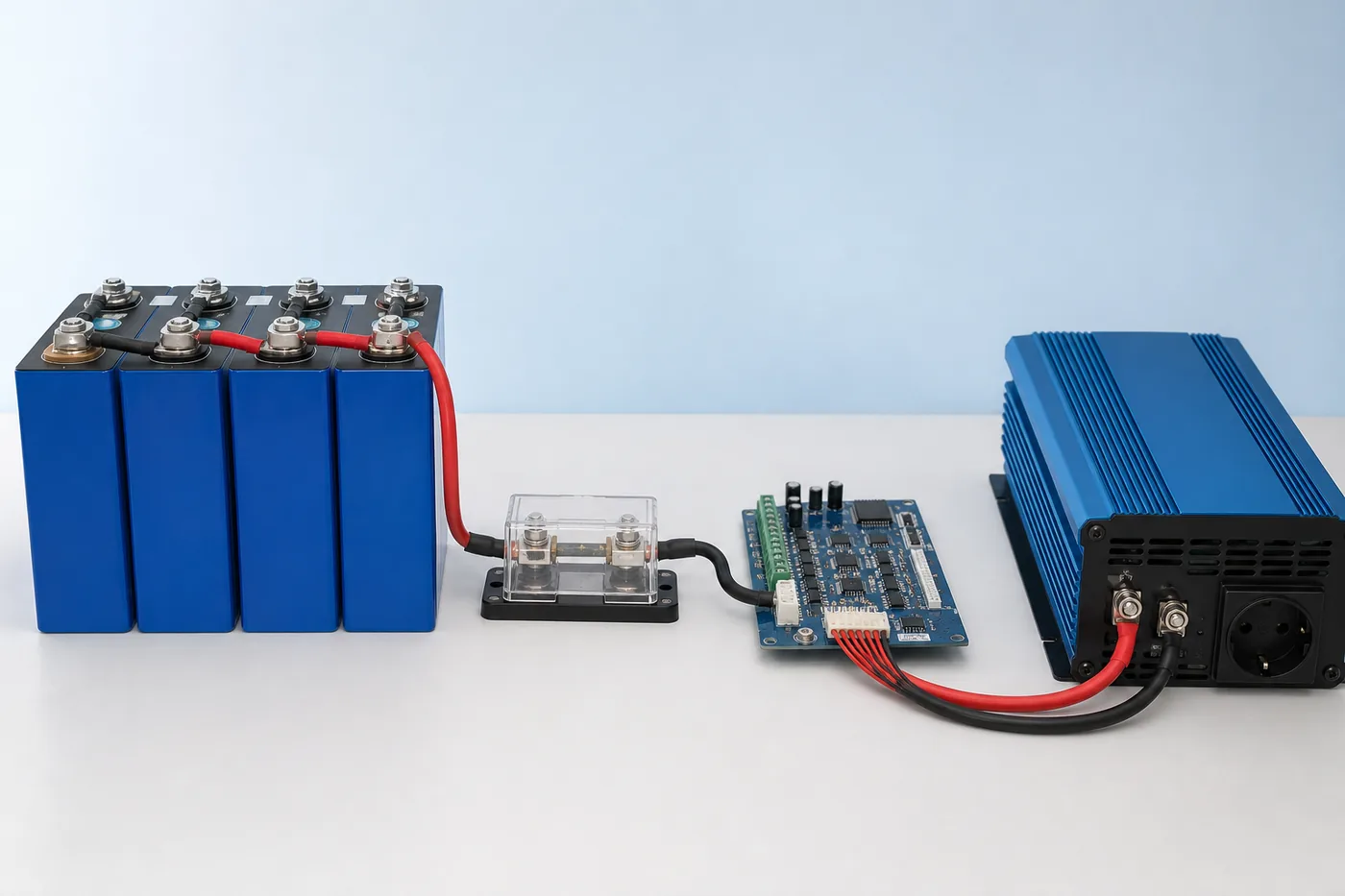
4. Account for inverter loss and startup surge
An inverter consumes power and is not 100% efficient. A 1,000W AC load may draw roughly 1,110W DC at 90% efficiency, before cable loss. On a 12.8V system that can exceed 86A.
Motors, compressors and pumps can demand a startup surge several times their running watts. Size the battery, BMS, fuse, wiring and inverter for the same verified surge window.
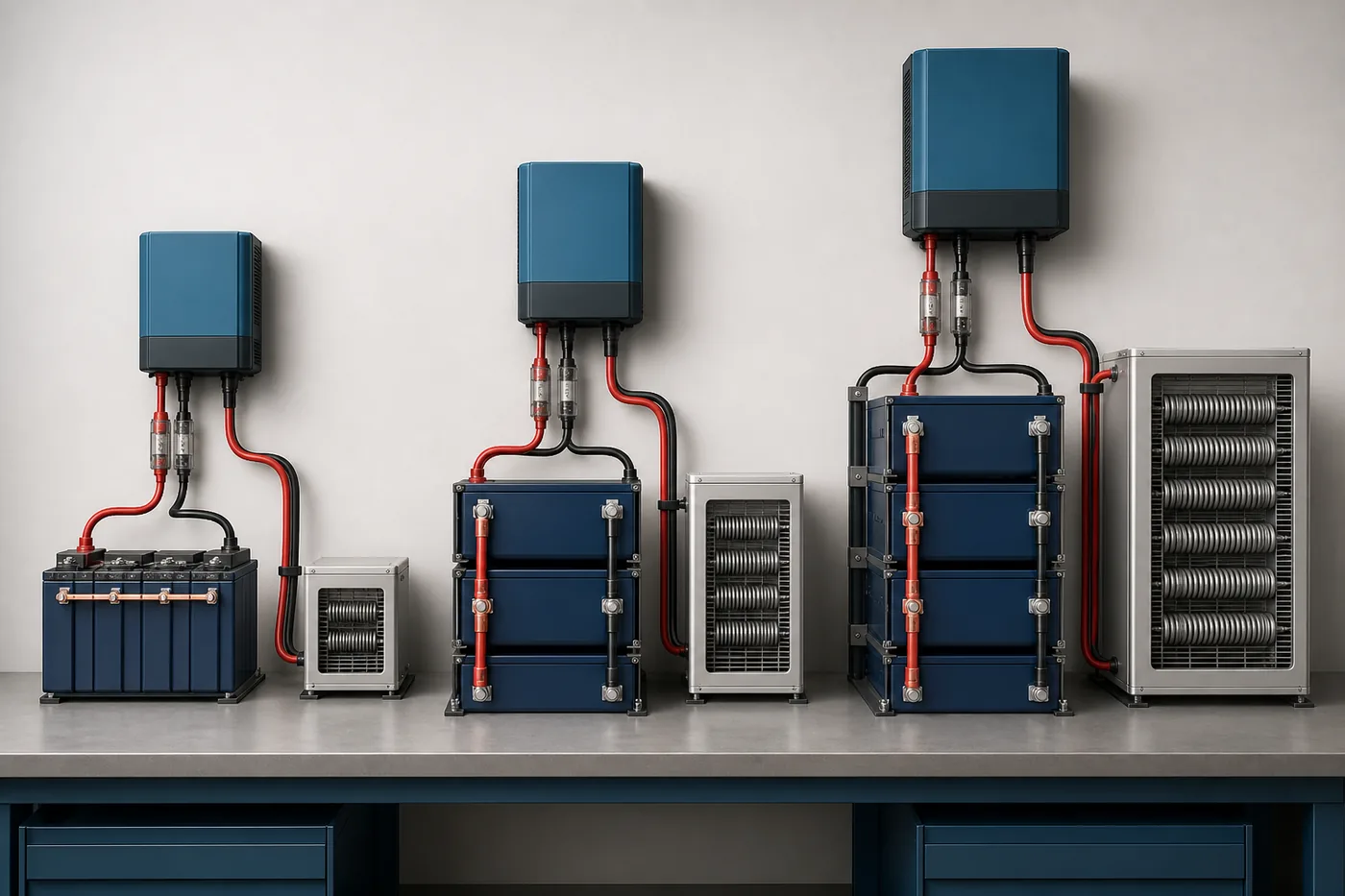
5. A safe sizing checklist
Start with the appliance running watts and surge watts. Convert the AC requirement to DC input using the inverter efficiency, divide by the lowest expected battery voltage, then compare the result with every continuous and peak current rating.
Keep practical headroom instead of operating at the trip point. Stop testing if cables, terminals or the battery become unusually hot, if voltage collapses, or if protection repeats.
6. How BAT BMS readings help
BAT BMS can help you observe pack voltage, current, cell spread and protection messages on compatible hardware. Use those readings to confirm trends, not to increase limits beyond the battery maker’s values.
A sudden current cutoff may be normal protection, an undersized BMS, a loose connection, low cell voltage, excessive temperature or an inverter surge. Diagnose the whole circuit before resetting anything.
How Many Watts Can a 100Ah LiFePO4 Battery Discharge? FAQ
How many watts is a 12V 100Ah LiFePO4 battery?
It stores about 1,280Wh at a 12.8V nominal voltage. Its maximum watts depend on the verified continuous current limit: 50A is about 640W DC; 100A is about 1,280W DC.
Can a 100Ah battery run a 2,000W inverter?
The inverter size alone does not prove the battery can supply it. A 2,000W load may require more than 170A from a 12V battery after losses, so the battery, BMS, fuse and cables must all support that current.
Should I use BMS peak current in the calculation?
Use continuous current for sustained loads. Peak current is only for the specified short duration and should be checked against the appliance startup surge.
Does a higher-voltage battery provide more watts?
At the same current rating, yes. A 25.6V system provides about twice the DC power of a 12.8V system, while a 51.2V system provides about four times as much.
Technical references
- Victron Energy Wiring Unlimited - Cable, fuse, voltage-drop and DC system design guidance.
- Texas Instruments battery-management overview - Battery monitoring and protection design context.
- BAT BMS on Google Play - Official Android app identity used for compatible monitoring references.